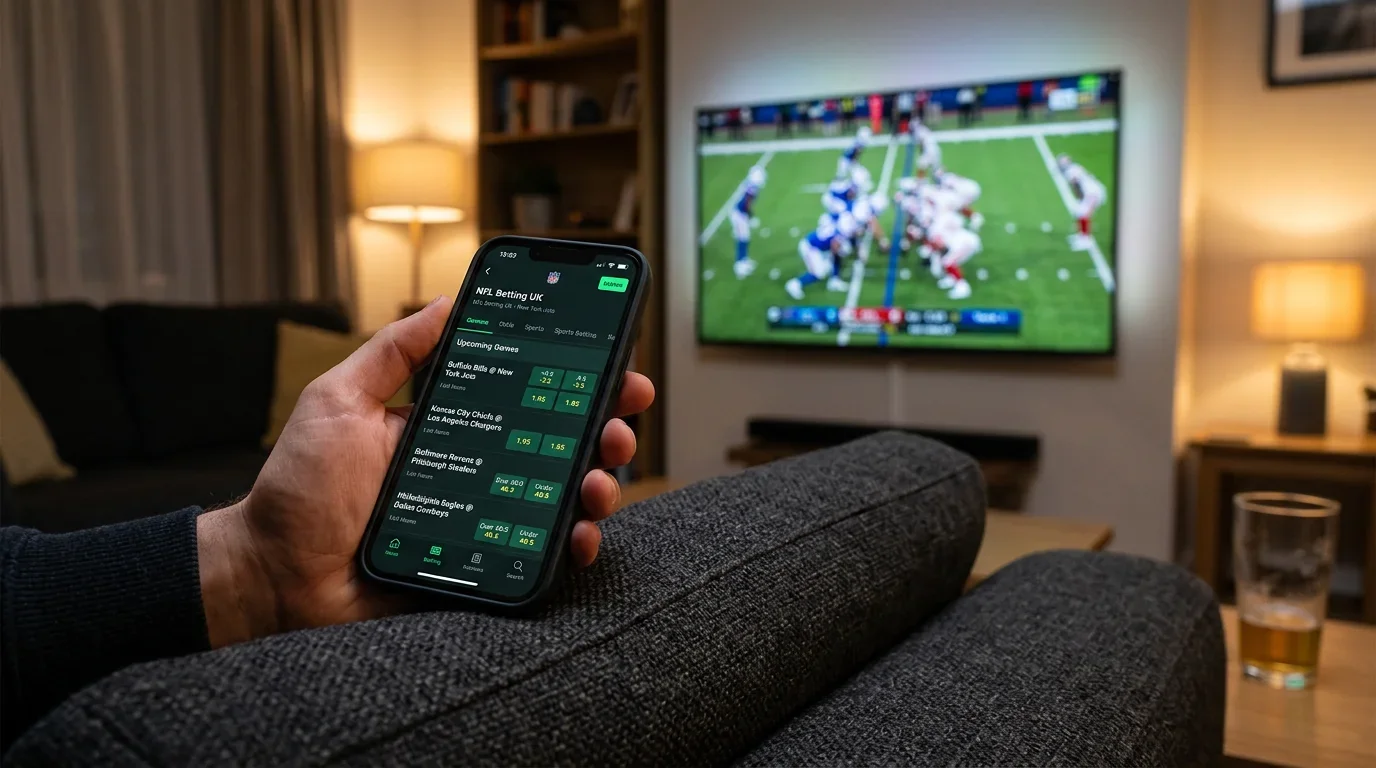
NFL Betting: UK Versus US — Fundamental Differences
 Available in US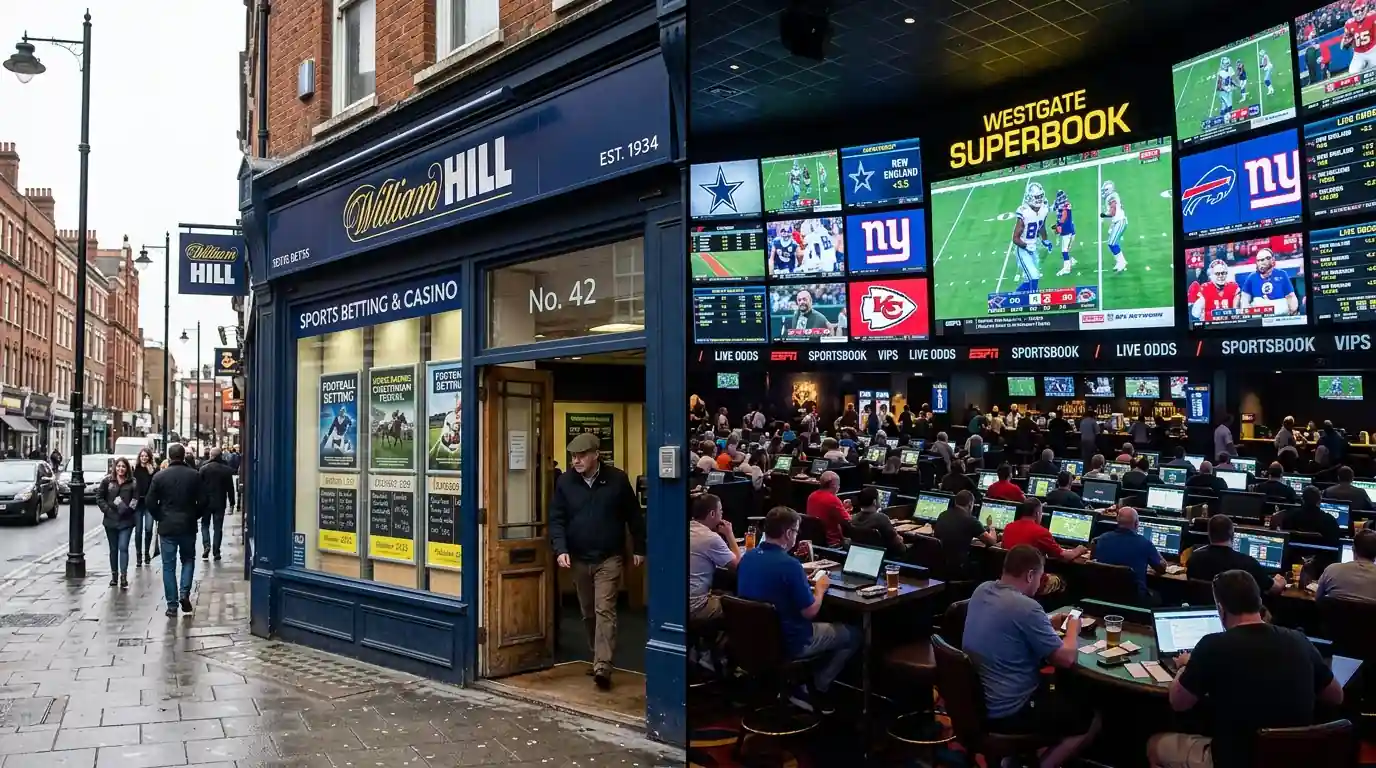
NFL Betting: UK Versus US — Fundamental Differences
I spent a week in Las Vegas during the NFL season two years ago, and the betting experience was so different from what I was used to in the UK that it felt like a different sport. Same games, same teams, same outcomes — but the sportsbook culture, the odds format, the tax treatment, the available markets and the regulatory framework were all foreign. That trip made me realise that UK punters who consume American betting content without understanding these structural differences are missing critical context. When a US podcast says “take the Chiefs at -110,” the economics of that bet are fundamentally different for an American bettor than for a UK one, and those differences affect strategy.
The UK and US betting ecosystems evolved independently. Britain has had legal, regulated betting for over a century — high-street bookmakers are woven into the cultural fabric. The US only began legalising sports betting state by state after the Supreme Court struck down PASPA in 2018. That gap in maturity shapes everything from how odds are displayed to how regulators approach consumer protection.
Regulation: UKGC Versus State-by-State US Licensing
The UK has one gambling regulator: the Gambling Commission (UKGC). Every licensed operator follows the same rules, every customer receives the same protections, and every dispute flows through the same resolution process. It is a centralised system with clear authority and consistent enforcement. The statutory gambling levy introduced from 6 April 2025 added a mandatory funding mechanism for gambling harm prevention — operators pay a percentage of their gross gambling yield, with no opt-out available.
The US operates entirely differently. Each state sets its own licensing requirements, tax rates, market rules and consumer protections. New York taxes operators at 51% of gross revenue; Nevada charges 6.75%. Some states allow mobile betting; others restrict it to in-person. Some permit prop betting on college sports; others prohibit it. The legal analysis from Clifford Chance described the 2025 UK reforms as positioning the country as a global leader in responsible gambling regulation — and the contrast with the US patchwork supports that assessment.
For UK punters, the practical implication is consistency. Whichever UKGC-licensed bookmaker you use for NFL betting, you know the rules. Deposits are protected, responsible gambling tools are mandatory, dispute resolution is formalised, and marketing requires your explicit consent. In the US, 20% of adults placed at least one sports bet in 2025, up from 12% in 2023 — rapid growth in a market where the regulatory infrastructure is still being built. The UK’s mature framework is a genuine advantage for punters, even if the market is smaller in absolute terms.
Available Markets and Odds Presentation
The most immediately visible difference is odds format. UK bookmakers default to fractional odds (5/2, 10/11) while US sportsbooks use American format (+150, -110). Most UK platforms now offer toggle options to display American odds alongside fractional, recognising that NFL bettors often switch between formats. The UK tax advantage means your returns are unaffected by format — but understanding American odds is essential for following US-based analysis and strategy content.
Market depth differs in subtle ways. US sportsbooks tend to offer a wider range of player props and micro-markets for NFL games, driven by the sport’s domestic popularity and the fierce competition between American operators for market share. UK bookmakers provide comprehensive spread, moneyline, totals and major prop markets, but the long tail of niche props — individual quarter player stats, alternative player lines, conditional markets — is thinner. This gap is narrowing as NFL betting grows in the UK, but it remains noticeable for punters who want the full range of granular markets.
Accumulator culture is a distinctly UK phenomenon. The acca — multiple selections combined into a single bet — is far more embedded in British betting than in American betting culture. US bettors use parlays, which are mechanically identical, but the cultural emphasis differs. In the UK, the Saturday or Sunday acca is a social ritual. In the US, single-game betting dominates. The UK online sports betting market generated approximately $11.2 billion in revenue in 2024, and accumulators represent a meaningful portion of that volume — a product category that US operators have tried to replicate through “same-game parlays” that mirror the UK bet builder concept.
Bet builders and same-game parlays illustrate the cross-pollination between markets. The US introduced same-game parlays and they rapidly became one of the most popular products in American sportsbooks. UK bookmakers then adopted the concept as “bet builders.” Now both markets offer the product, but the pricing, available combinations and correlation rules vary between UK and US operators. UK punters using American strategy guides for bet builders should check whether the specific combinations discussed are actually available at their UK bookmaker.
Exchange betting remains overwhelmingly a UK product. Betfair and Matchbook operate from the UK, and while Betfair has expanded into some US markets, the exchange model is fundamentally British. US bettors who want to lay a team or trade positions during a game have limited options. UK punters have a structural advantage here — the ability to lay, trade and hedge on exchanges gives them tools that most American bettors simply do not have access to.
Can UK punters use American sportsbook apps like DraftKings or FanDuel?
No, not for real-money betting. American sportsbook apps are geo-restricted and require you to be physically located in a US state where sports betting is legal. UK-based users cannot access real-money betting on DraftKings, FanDuel or other US-licensed apps. UK punters should use UKGC-licensed bookmakers, which offer comprehensive NFL markets with the consumer protections required under British law. Some American platforms offer fantasy sports or free-to-play products internationally, but these are separate from their sportsbook operations.
Why do UK bookmakers offer fewer NFL prop markets than US sportsbooks?
NFL is a domestic sport in the US, generating enormous betting volume and justifying deep market coverage. In the UK, NFL is a growing but still secondary sport after football, horse racing and tennis. UK bookmakers allocate trading resources based on demand, and lower NFL volume means fewer traders dedicated to pricing niche prop markets. The gap narrows during high-profile NFL events — Super Bowl week, for instance, sees UK bookmakers significantly expand their prop offerings. As NFL continues to grow in the UK, prop market depth is likely to expand alongside it.
Prepared by the Online Betting nfl Games editorial staff.