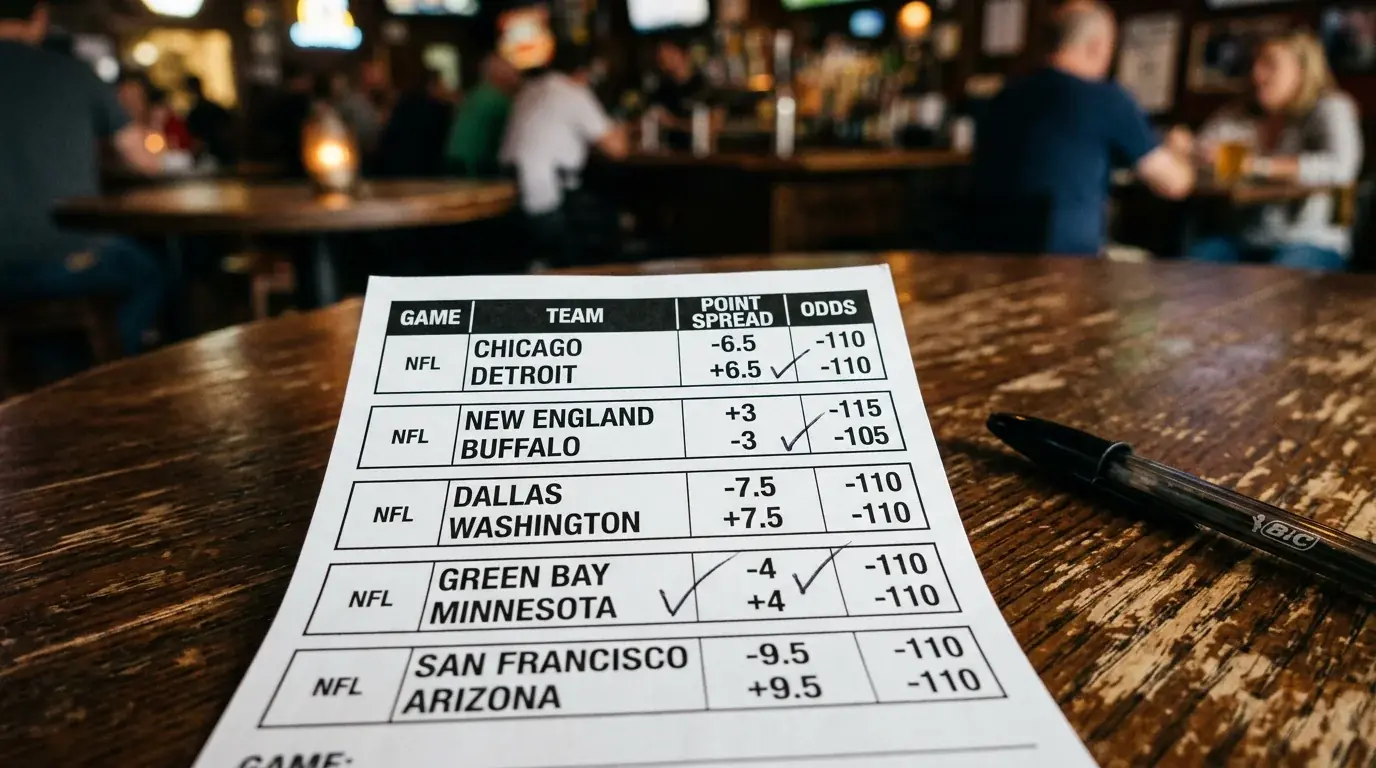
NFL Betting and UK Tax: What Punters Keep
 Available in US
NFL Betting and UK Tax: What Punters Keep
The question comes up every Super Bowl season, usually from someone who has just won a few hundred pounds on a futures bet and is wondering whether HMRC is about to come knocking. I have had this conversation so many times that I can almost script it: “Do I pay tax on my NFL winnings?” No. “Really?” Really. “What about if I win a lot?” Still no. The UK tax position on gambling winnings is one of the most punter-friendly systems in the world, and understanding why it works the way it does gives you a clearer picture of the economics behind every bet you place.
In the United Kingdom, betting winnings are not subject to income tax, capital gains tax or any other direct taxation. Whether you win £5 on an NFL accumulator or £50,000 on a Super Bowl futures bet, you keep the entire amount. This has been the case since 2001, when the government abolished betting duty on individual wagers and shifted the tax burden entirely onto the operators. The reasoning was pragmatic: taxing punters drove betting offshore, while taxing operators kept the revenue onshore and the industry regulated.
Point of Consumption Tax: The Operator’s Burden
The mechanism that replaced punter-facing tax is the Point of Consumption Tax, introduced in 2014 at 15% and subsequently raised to 21% of gross gambling yield. POCT applies to any operator serving UK customers, regardless of where the operator is based. An offshore bookmaker licensed by the UKGC pays the same 21% on UK customer revenue as a domestic operator. This eliminated the regulatory arbitrage that had allowed some operators to avoid UK taxation by locating in tax-friendly jurisdictions.
Provisional betting and gaming duty revenue for Q1 of the 2025/26 fiscal year (April-June 2025) reached £982 million — 11% higher than the same period the previous year. The statutory gambling levy introduced from 6 April 2025 added a further financial obligation on operators, with the levy funding research, prevention and treatment of gambling harm. Together, POCT and the levy represent a significant cost base for operators, and that cost is inevitably reflected in the odds they offer.
How does this affect your NFL betting? Indirectly but meaningfully. The 21% POCT comes out of the bookmaker’s gross yield — the difference between what they take in and what they pay out. To maintain profitability after paying 21% tax plus the statutory levy, operators build margin into their odds. When you see a 4.5% overround on an NFL spread market, a portion of that margin covers the operator’s tax obligations. In a world without POCT, odds would theoretically be slightly more generous. But in exchange, you pay zero personal tax on winnings — a trade-off that overwhelmingly favours the bettor.
UK Versus US: A Tax Comparison for NFL Bettors
The contrast with the United States is stark, and it puts the UK position in sharp perspective. American bettors pay tax on their gambling winnings. The federal tax rate on gambling income is 24%, withheld automatically on winnings above certain thresholds ($5,000 for most bet types). On top of that, most states impose their own income tax on gambling winnings, adding another 3-13% depending on the state. A New York bettor who wins $10,000 on an NFL bet takes home roughly $6,300 after federal and state taxes.
The total legal sports betting handle in the US reached approximately $165 billion in 2025, and the tax revenue generated from that activity is enormous — billions of dollars flowing to federal and state treasuries. The US system funds public services through punter taxation, while the UK system funds them through operator taxation. Both achieve the goal of tax revenue generation, but the UK approach is objectively better for the individual bettor.
There is another dimension that UK punters rarely consider: the tax treatment of losses. In the US, gamblers can deduct losses against winnings for tax purposes, but only if they itemise their deductions — a process that involves detailed record-keeping and tax complexity. In the UK, the question is irrelevant because there is no taxable event in the first place. No winnings tax means no loss deductions needed, which simplifies everything.
For UK punters who follow American NFL content — podcasts, strategy sites, sharp betting discussions — the tax difference is important context. When an American bettor discusses a “10% edge” or a “$1,000 profit,” they are talking pre-tax. The actual after-tax return is lower. Your equivalent profit in the UK is the full amount, which means the effective value of your edge is higher for a UK bettor than for an American bettor with identical results.
One question that surfaces regularly: does HMRC treat professional gambling differently? The short answer is no. Even if you bet full-time and generate your primary income from NFL wagering, HMRC does not classify gambling as a trade. The landmark legal precedent was established decades ago and has been consistently upheld. Your winnings remain untaxed regardless of volume, frequency, or whether you consider yourself a hobbyist or a professional. This creates an unusually favourable environment for serious NFL bettors in the UK — your entire edge flows to your bottom line, with no government intermediary claiming a share.
Do professional NFL bettors in the UK pay income tax on winnings?
No. Gambling winnings in the UK are not classified as taxable income regardless of the amount or frequency. This applies whether you consider yourself a recreational bettor or a professional. HMRC has consistently held the position that gambling is not a trade for tax purposes. However, if you provide tipster services, operate a betting syndicate as a business, or earn income from gambling-related activities beyond the winnings themselves, those separate income streams may be taxable. The winnings from the bets themselves remain tax-free.
Has the 2025 statutory levy changed how much tax UK bookmakers pay?
Yes. The statutory gambling levy, effective from 6 April 2025, added a new financial obligation on top of the existing 21% Point of Consumption Tax. Operators now pay POCT plus the levy percentage based on their gross gambling yield. The combined burden is the highest it has been since gambling taxation was restructured in 2001. For punters, the levy does not create a direct cost, but it may contribute to marginally wider overrounds as operators adjust pricing to maintain profitability under the increased tax and levy burden.
Written by the editors at Online Betting nfl Games.