NFL Handicap Betting Explained: A UK Perspective
 Available in US
NFL Handicap Betting Explained: A UK Perspective
A few years back, I had a conversation with a punter at a London sportsbook who was staring at his screen in genuine confusion. “I bet the handicap on the NFL, same as I do for Premier League matches. But the settlement was different. What’s the catch?” There is no catch — but there is a terminology fog that UK bettors walk through when they move from football handicaps to American football spreads. The concept is identical. The vocabulary, the presentation and some of the mechanics differ just enough to trip you up if nobody explains it properly.
If you have ever backed a team at -1.5 in a Premier League match or used Asian handicaps on the exchanges, you already understand the foundation. NFL handicap betting — which Americans call “the spread” — applies a points advantage or disadvantage to one side to equalise the market. The difference sits in how UK bookmakers present it, how alternative lines work, and how against-the-spread records become the single most important analytical tool for handicap bettors. The CEO of the American Gaming Association, Bill Miller, has spoken publicly about the scale of the illegal betting market and the difficulty the public has distinguishing legal from illegal operators — a reminder that understanding these markets through UKGC-licensed platforms is not just preferable but essential for your protection.
Alternative Handicap Lines for NFL
Standard handicaps give you one line — the bookmaker’s assessment of the likely margin. But NFL betting also offers alternative handicap lines, and this is where UK punters can find genuine flexibility.
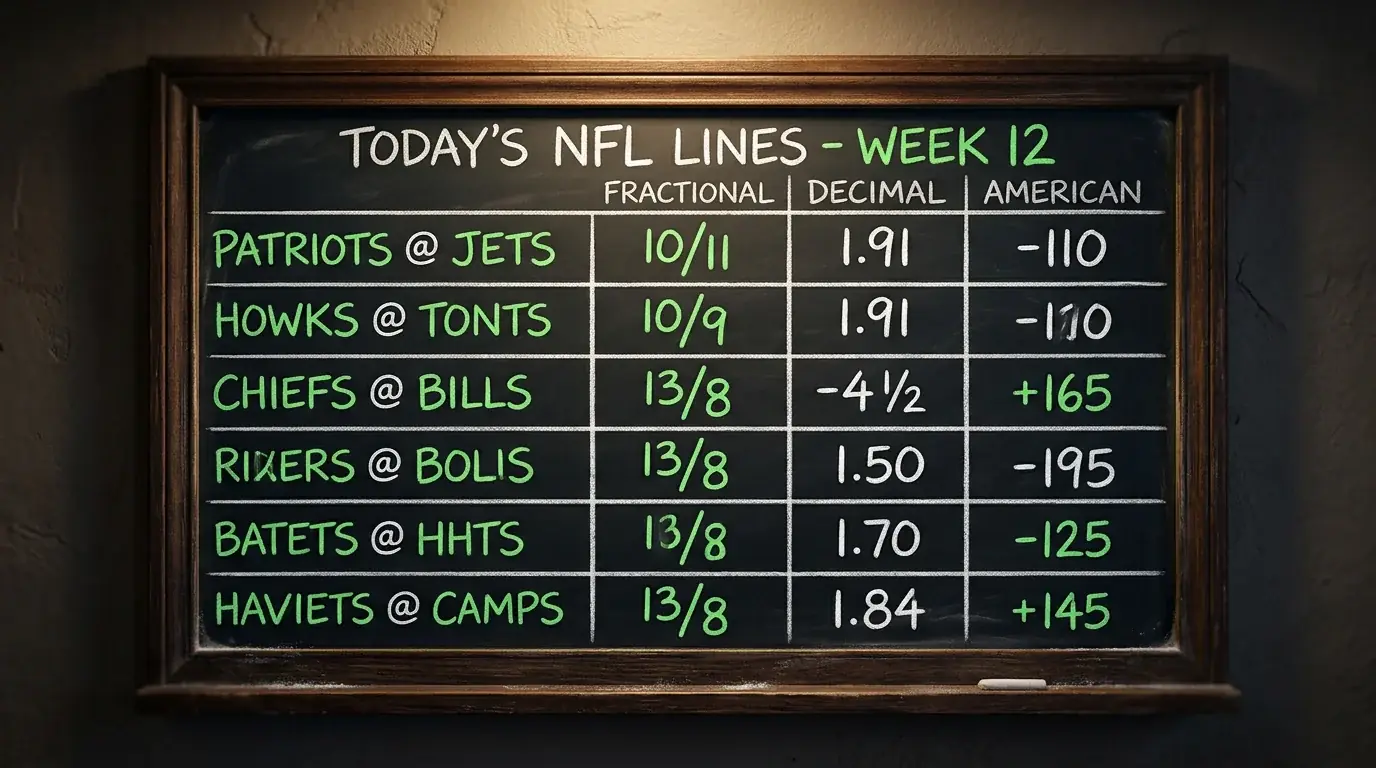
Suppose the standard line is Kansas City Chiefs -3.5 at 10/11. An alternative handicap lets you take the Chiefs at -6.5 for longer odds (maybe 6/4) or at -1.5 for shorter odds (perhaps 4/7). You are essentially trading probability for price. The wider you set the handicap, the less likely it covers but the more it pays. The narrower you go, the safer the bet but the smaller the return.
In a global sports betting market valued at approximately $100.9 billion in 2024, the NFL’s contribution through spread and handicap markets is substantial. The liquidity behind these markets means alternative lines are priced competitively rather than carrying excessive margins. UK bookmakers offer anywhere from 3 to 10 alternative handicap options per game, depending on the operator and the profile of the match.
I use alternative handicaps in two specific scenarios. First, when I have a strong view that a game will be a blowout but the standard spread does not reflect that — taking a wider handicap gives me better odds on a margin I already expect. Second, when I want to use a narrower handicap as a safer leg in an accumulator, sacrificing individual return for increased confidence across the multi.
The mechanics of alternative handicaps mirror the standard point spread in every way except the number itself. Settlement rules, overtime inclusion, push scenarios — all identical. The only difference is the line and the price attached to it.
Against the Spread Records and How to Use Them
Ask any serious NFL bettor in the US what the first thing they check before placing a spread bet is, and they will say “ATS record.” Against the spread — abbreviated ATS — tracks how a team has performed relative to the handicap rather than simply whether they won or lost. A team might be 8-4 on the season (wins and losses) but only 5-7 ATS, meaning they have failed to cover the spread more often than not despite winning most of their games. That distinction is everything for handicap bettors.
The total legal sports betting handle in the United States reached approximately $165 billion in 2025, and spread betting dominated that figure. ATS records are the primary analytical tool that professional bettors use to assess value in that market, and UK punters can access the same data freely through sites like Pro Football Reference, Covers and TeamRankings.
Here is how I integrate ATS data into my handicapping process. I look at three specific ATS splits: home/away ATS, ATS as favourite/underdog, and ATS performance over the last five games. A team that covers at 70% as a home underdog but only 35% as a road favourite tells me something about how the market prices them — and where value might sit. Recency matters too: a team’s ATS trend over recent weeks reflects current form better than their season-long record, which can be skewed by early-season results under different conditions.
One trap to avoid: treating ATS records as predictive in small samples. A team that is 3-0 ATS after three weeks is not on a “trend” — it is a coin flip that happened to land the same way three times. I need at least 10-12 games of data before I treat ATS splits as meaningful, and even then, I weight them alongside matchup analysis and situational factors rather than betting on the numbers alone.
Conference and divisional splits add another dimension. NFC West teams might cover at a different rate against AFC opponents than against their own division. Divisional games — where teams play each other twice a year and coaches have film on every tendency — produce different ATS patterns than non-divisional matchups. The more granular your ATS analysis, the sharper your handicap bets become.
One metric worth tracking alongside ATS is margin of cover — how much a team beats or misses the spread by. A team that is 6-6 ATS but covers by an average of 5 points in their wins and misses by only 1.5 in their losses is performing better than their raw record suggests. Margin of cover helps you identify teams that are close to flipping their ATS record, which is exactly where betting value tends to cluster. UK punters who invest time in this data gain an analytical edge that most casual bettors never develop.
Is NFL handicap betting the same as Asian handicap in football?
The core concept is identical — applying a points advantage or disadvantage to one team to level the market. The main difference is structural. Asian handicaps in football use quarter-point increments and can split stakes across two lines, while NFL handicaps use half-point or whole-point lines with a single outcome. NFL handicaps also include overtime in settlement by default, whereas football handicap rules vary by bookmaker. If you are comfortable with Asian handicaps, the transition to NFL handicap betting is straightforward.
Where can UK punters find reliable NFL against-the-spread records?
Pro Football Reference, Covers and TeamRankings all publish free ATS records for every NFL team, updated weekly during the season. These sites break down ATS performance by home/away, favourite/underdog, divisional games and more. For deeper analysis, Football Outsiders and Sharp Football Stats offer context-adjusted metrics that go beyond raw ATS numbers. All of these resources are freely accessible from the UK without any geographical restrictions.
Published by the Online Betting nfl Games team.