NFL Betting Mistakes UK Punters Make — And How to Fix Them
 Available in US
NFL Betting Mistakes UK Punters Make — And How to Fix Them
I kept a detailed record of every NFL bet I placed during my first two seasons. Looking back at that spreadsheet now is equal parts embarrassing and educational. The patterns jump out: heavy favourites backed at terrible prices, 7-fold accumulators placed every Sunday, doubling stakes after losses on Monday Night Football. I did not realise I was making mistakes at the time — I thought I was being strategic. The data told a different story. Over those two seasons, my return was about 72% of total stakes. Every mistake I describe in this article is one I made myself before the numbers forced me to change.
UK punters who cross over from football betting carry habits that work well for the Premier League but fail in the NFL context. The sports are structurally different — game frequency, scoring patterns, market depth — and strategies that generate profit on Saturday afternoon football can drain your bankroll on Sunday night American football. Recognising the specific traps is the first step toward avoiding them.
Cognitive Biases in NFL Betting
Recency bias is the most expensive cognitive error in NFL betting. A team wins three games in a row and suddenly everyone sees them as contenders. The spread tightens, the moneyline shortens, and the value evaporates — because the market is reacting to recent results rather than underlying quality. The reverse happens after losses: a good team drops two in a row and the public abandons them, pushing their odds to levels that represent genuine value. Disciplined bettors profit from this pattern week after week.
The Kansas City Chiefs are the most popular NFL team among UK fans, generating 9.5% of all NFL team-related searches in the UK — approximately 50,000 queries per month. That popularity creates a specific bias trap. UK punters who follow the Chiefs closely develop an emotional attachment that clouds their assessment. I have watched friends back the Chiefs at 1/4 on the moneyline because “they always find a way,” ignoring the fact that 1/4 requires a win rate above 80% to break even. Popularity and value are inversely correlated in betting markets — the more a team is backed by the public, the less value their odds typically offer.
Confirmation bias manifests when punters seek out information that supports a bet they have already decided to place. You want to back the Bills, so you read three articles that support the Bills and ignore the one that highlights their defensive vulnerability. I combat this by forcing myself to build the case against every bet before I place it. If the counter-case is stronger than the case for, I pass. This single habit has improved my strike rate more than any analytical tool.
Narrative bias is particularly dangerous during playoff season. The media builds stories around teams — the underdog’s redemption, the veteran’s last chance, the dynasty’s next chapter — and those narratives seep into betting decisions. Narratives are not analysis. They are entertainment. The bookmaker does not price narrative; they price probability. When you catch yourself placing a bet because the story feels right rather than because the numbers support it, you are letting narrative bias steer your bankroll.
Structural Mistakes: Bankroll, Accas and Chasing
Oversized stakes are the structural error that causes the most financial damage, and UK punters are particularly susceptible because of the deposit-and-bet-immediately culture that mobile apps encourage. Approximately 290 million online bets are placed monthly across UK platforms, and a significant proportion of those involve stakes that exceed prudent bankroll management limits. The standard recommendation — 2-5% of your bankroll per bet — exists because it gives you enough runway to survive the inevitable losing streaks that every NFL season produces. A 20-bet losing streak is not a theoretical possibility; it is a statistical certainty over enough seasons. Your staking plan needs to survive it.
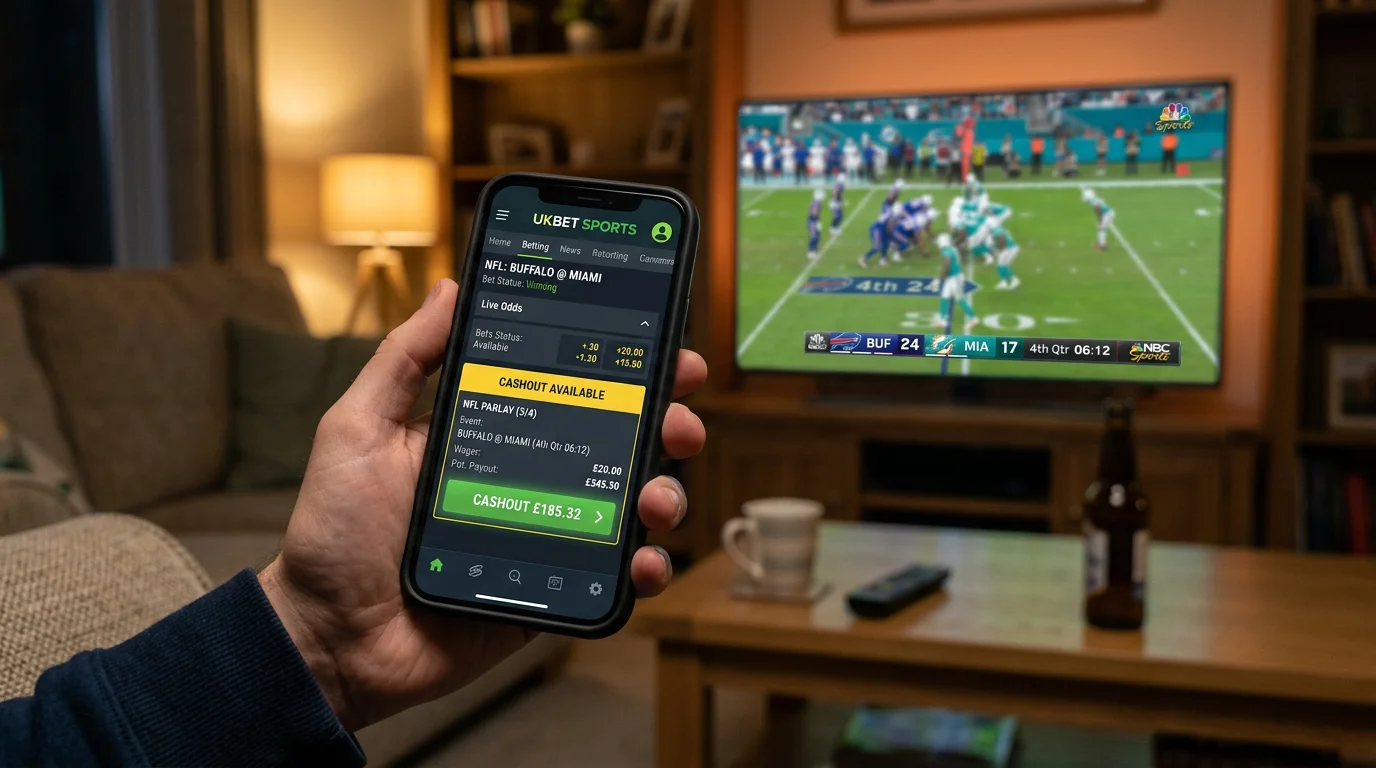
Accumulator addiction is the UK-specific trap that has no real equivalent in American betting culture. The acca is embedded in British betting DNA — a small stake, big potential return, mates comparing slips. But the mathematics are brutal: each additional leg in an acca multiplies the bookmaker’s effective margin, and by the time you reach five or six legs, the house edge can exceed 25%. I still enjoy the occasional NFL acca as entertainment, but I track it separately from my serious betting budget. If your acca spending exceeds 10% of your total NFL bankroll, you are effectively donating money to the bookmaker’s bottom line.
Chasing losses after late-night NFL games is the mistake I see most often among UK punters, because the timing creates a perfect storm for bad decisions. It is 1am. Your pre-game bets have lost. Monday Night Football is still on. Your app is open. Depositing another £50 and throwing it on the live moneyline feels like reclaiming control. It is not. Decisions made at 1am after a losing evening are almost always worse than decisions made at 6pm with a clear head. The fix is mechanical: set deposit limits that prevent impulsive top-ups, and close the app after your pre-game bets are settled. The game will be there tomorrow in the highlights. Your bankroll might not be.
One more structural error worth highlighting: ignoring line shopping. The difference between the best and worst available price on the same NFL market typically runs 0.03-0.10 in decimal odds. Over a season, that gap compounds into hundreds of pounds in lost returns. Every bet you place at a worse price than was available is a voluntary donation to the bookmaker. Check at least two prices before every bet — it takes seconds and costs nothing.
Why do UK punters lose more on NFL accumulators than single bets?
The bookmaker’s margin compounds with each leg you add. On a single NFL spread bet, the overround is typically 4-5%. On a 4-fold accumulator, the effective margin can reach 15-20%, and on a 6-fold it can exceed 25%. This means the bookmaker takes a larger cut of every pound you wager on accumulators than on singles. Additionally, the probability of all legs winning drops sharply — even with a 55% win rate per leg, a 5-fold has only about a 5% chance of success. The combination of higher margins and lower probability makes accumulators structurally harder to profit from than singles.
How do I stop chasing losses after a late-night NFL game?
Set mechanical barriers before the temptation arises. Deposit limits are the most effective tool — set a daily or weekly cap that prevents impulsive top-ups. Close the betting app after your pre-game bets are settled and resist reopening it until the next day. If you find yourself regularly chasing losses during late-night games, consider using the cooling-off or ‘take a break’ feature that UK bookmakers are required to offer, which temporarily locks your account for 24 hours or longer. The goal is to make impulsive action difficult rather than relying on willpower alone.
Written by the editors at Online Betting nfl Games.