NFL Season Structure for UK Bettors: A Calendar Guide
 Available in US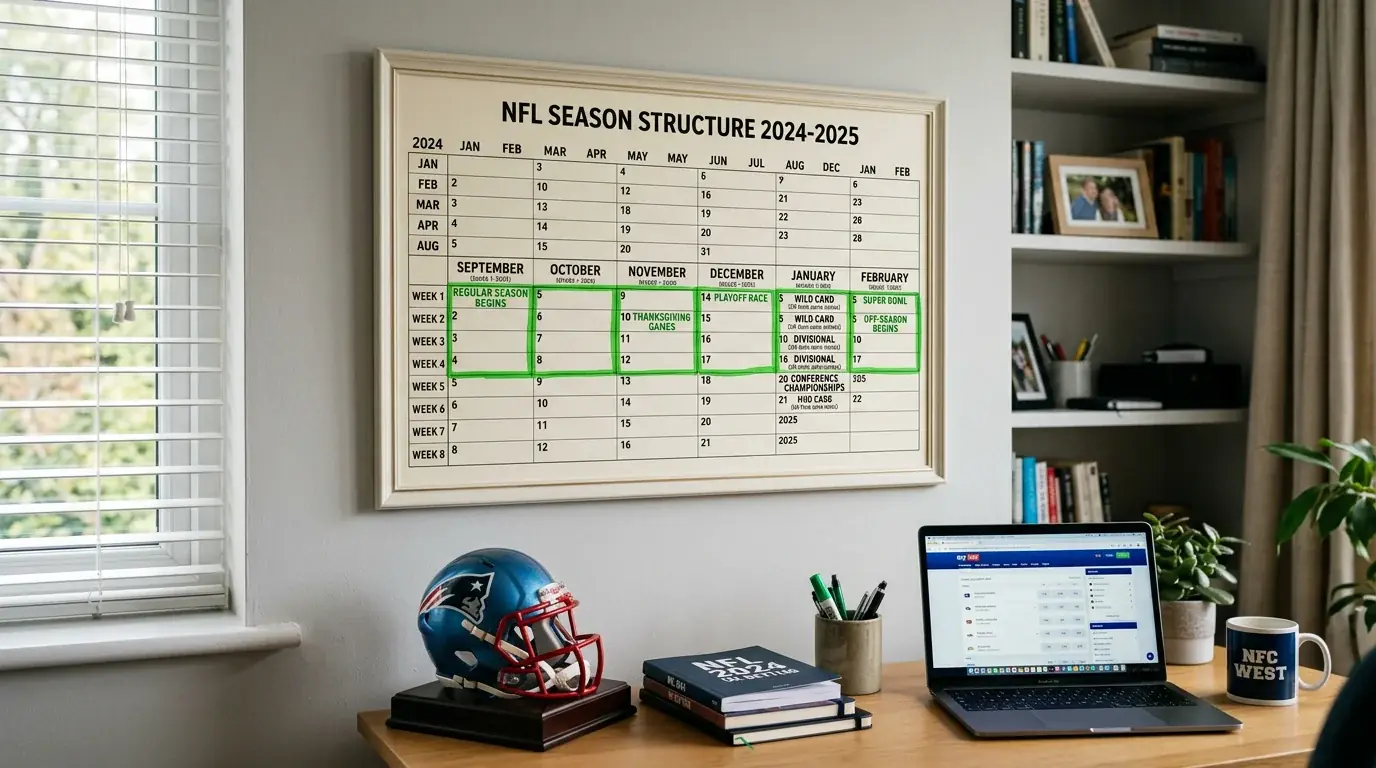
NFL Season Structure for UK Bettors: A Calendar Guide
A Premier League fan once asked me how NFL bettors cope with only 17 games per season. My answer was simple: every single one of them matters more. In a 38-game football season, a mid-table side can lose six or seven matches and still finish comfortably. In the NFL, a single loss can be the difference between a playoff place and a wasted season. That compression — fewer games, higher stakes per fixture — fundamentally shapes how the betting market behaves, and understanding the calendar is the foundation of every NFL betting strategy.
Jamie Reynolds, a UK-based sports marketing consultant, has observed that British fans are less tribal than American ones when it comes to NFL. That neutrality is actually an advantage for betting purposes. UK punters tend to evaluate games on merit rather than through team loyalty, which makes the structural understanding of the season even more valuable — you are free to follow the value wherever it sits, week to week, without emotional attachments clouding your judgement.
Regular Season: 18 Weeks of Betting Opportunities
The NFL regular season runs from early September to early January, spanning 18 weeks with each team playing 17 games and receiving one bye week. For UK bettors, this translates to approximately 256 regular-season games across the schedule, each producing multiple betting markets.
The weekly rhythm is distinctive. Thursday Night Football kicks off the week with a single game. Sunday brings the bulk of the action: up to seven early-afternoon games (18:00 GMT kickoff), up to four late-afternoon games (21:05 or 21:25 GMT), and Sunday Night Football (01:20 GMT Monday morning in the UK). Monday Night Football closes the week (01:15 GMT Tuesday morning). For UK punters, the early Sunday window is the most accessible — six o’clock in the evening, with multiple games to watch and bet simultaneously.
Approximately 14.3 million people in the UK identify as NFL fans, and the weekly schedule creates a natural rhythm for their betting activity. The Thursday-Sunday-Monday cadence means lines open mid-week, sharp money moves the lines Thursday through Saturday, and public money floods in on Sunday morning. Knowing where you sit in that sequence — and what information has already been priced in by the time you place your bet — is critical.
Bye weeks introduce a unique variable. Each team has one week off during the season, typically between Weeks 5 and 14. The bye week gives teams extra preparation time for their next opponent, and the data consistently shows a performance uptick for teams coming off their bye. For bettors, tracking bye weeks is essential for two reasons: first, the post-bye advantage is real and quantifiable; second, bye weeks reduce the number of available games in a given week, which changes the composition of the Sunday slate and can affect your accumulator or multi-bet strategies.
The other scheduling nuance UK punters should track is divisional matchups. Each team plays six divisional games (three opponents, home and away), and these rematches create a different betting dynamic than non-divisional fixtures. Familiarity breeds tighter games — divisional matches tend to produce closer margins and lower totals than cross-conference matchups, because coaching staffs have extensive film on their rivals and game-plan specifically for division games.
Playoff Bracket and Elimination Betting
The NFL playoffs are single elimination. Lose once and your season is over. This format creates volatility that UK bettors more familiar with two-legged European cup ties or multi-match test series need to appreciate. A bad quarter, a single turnover, a missed field goal — any of these can end a team’s season in a way that almost never happens in football or cricket.
The playoff structure features four rounds. Wild Card Weekend (six games across three days) launches the post-season in January. The Divisional Round follows with four games the next weekend. Conference Championship Weekend determines the two Super Bowl participants. And the Super Bowl itself — the culmination — sits roughly two weeks later in early February. The handle on Super Bowl LX reached $1.71-1.76 billion, a new record, illustrating the scale of betting interest that builds through each playoff round.
For bettors, the playoff rounds present a distinctly different market from the regular season. Spreads tend to tighten as the field narrows — the gap between the best and worst playoff team is much smaller than between the best and worst regular-season team. Line movement accelerates because the stakes attract sharper money. And futures positions begin to converge toward their final values, creating hedging opportunities for punters who placed early-season bets.
The two-week gap before the Super Bowl is unique in professional sport. No other major event gives bettors a full 14 days to analyse a single game. Lines open immediately after the Conference Championships and move throughout the fortnight as information trickles out — media day quotes, injury updates, practice reports. The extended analysis window is both an opportunity and a trap: it gives you time to research thoroughly, but it also gives you time to overthink and talk yourself into bad bets. My rule during Super Bowl fortnight is to set my position by Tuesday after the Conference Championships and resist the urge to tinker based on noise. The sheer volume of media coverage during those two weeks generates more opinion than insight, and the punters who profit are usually the ones who trust their initial analysis and ignore the chatter.
How many NFL games can UK punters bet on each week during the regular season?
A standard NFL week features between 14 and 16 games, including Thursday Night Football, the Sunday slate and Monday Night Football. Bye weeks reduce the number of games by one or two per week during the middle portion of the season. The Sunday afternoon window alone typically offers 10-14 simultaneous games. UK bookmakers list markets for every regular-season game, giving you a full slate of betting opportunities each week from September through early January.
What is a bye week and how does it affect NFL betting?
A bye week is a scheduled week off during the regular season. Each NFL team receives one bye week, typically falling between Weeks 5 and 14. Teams returning from a bye have historically performed better than average, benefiting from extra rest, preparation time and injury recovery. For bettors, the post-bye uplift is a well-documented factor worth incorporating into your analysis. The flipside is that bye weeks reduce the number of available games in a given week, which may affect your accumulator or multi-bet strategy.
Created by the ”Online Betting nfl Games” editorial team.